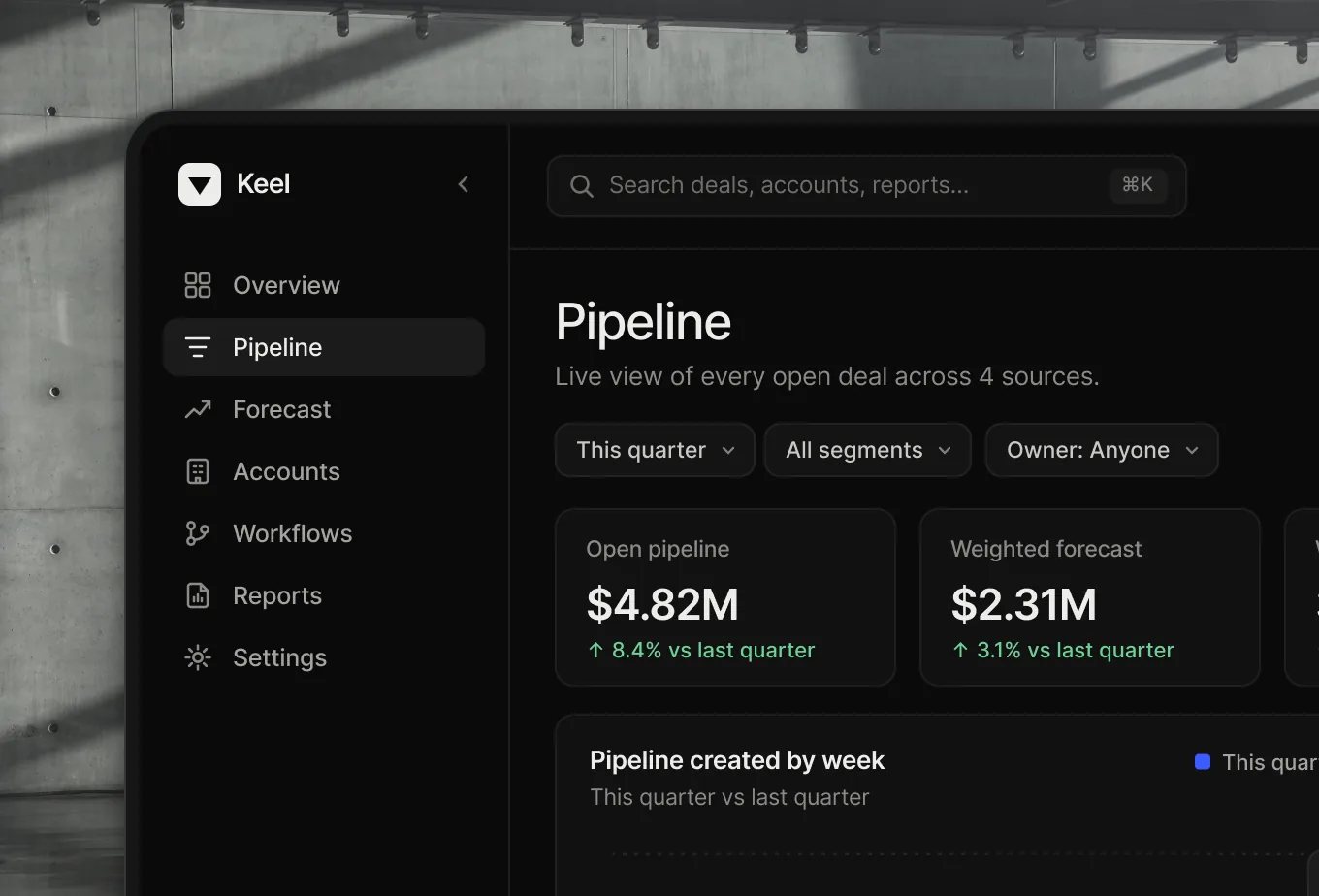
Plan the range, not a guess
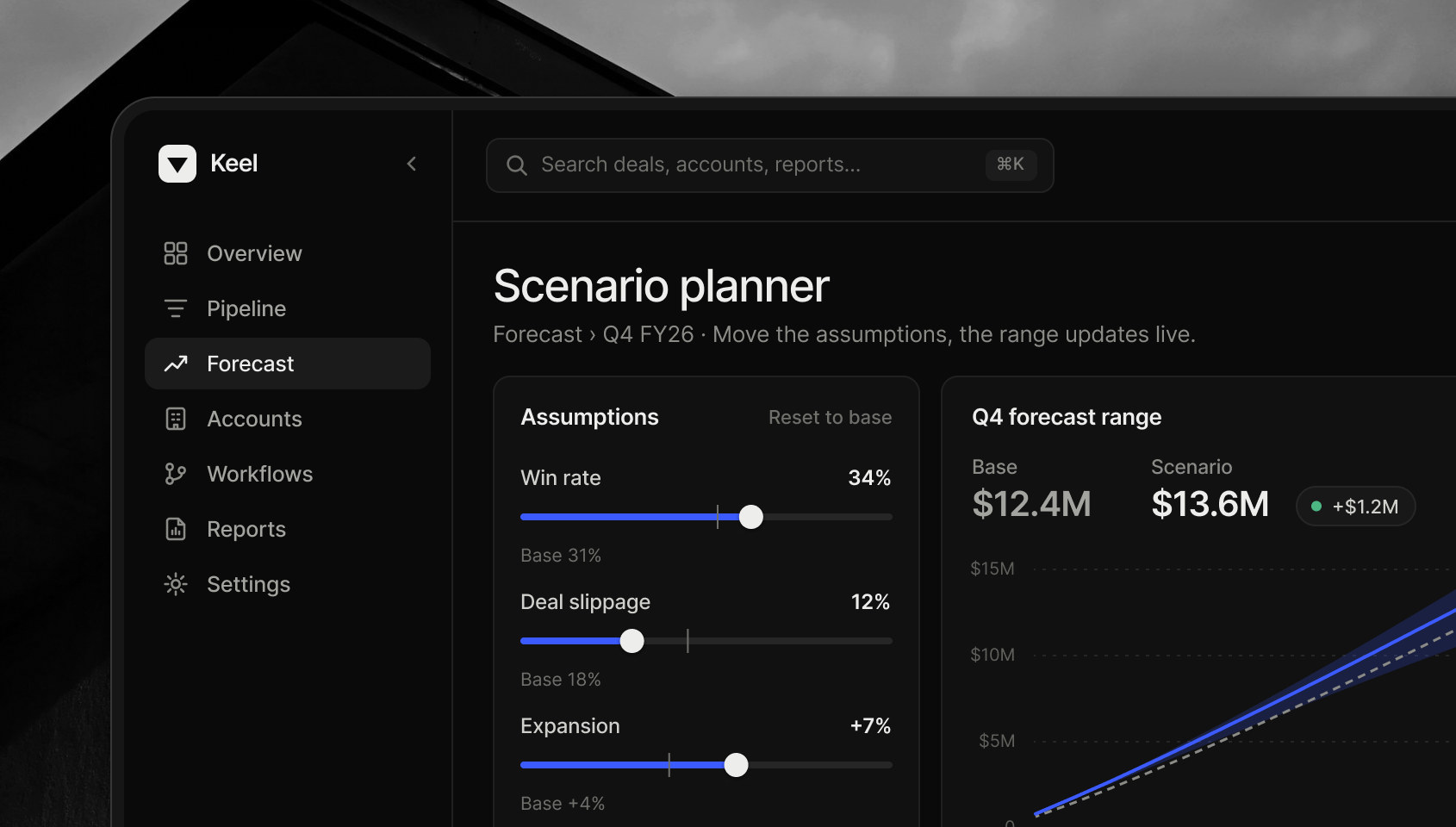
Learn moreChange win rate, slippage and expansion and see the range your quarter will land in.
- Range at mid-quarter
- ±4%
- Scenarios per forecast
- 3

Keel turns CRM, billing and product data into one live revenue model. Sales, finance and success stop arguing about the number and start acting on it.

Why Keel
Keel pulls pipeline, billing and usage into one live model, so RevOps acts on numbers instead of assembling them.
Product
Scenarios, deal inspection and reports on one model.

Change win rate, slippage and expansion and see the range your quarter will land in.
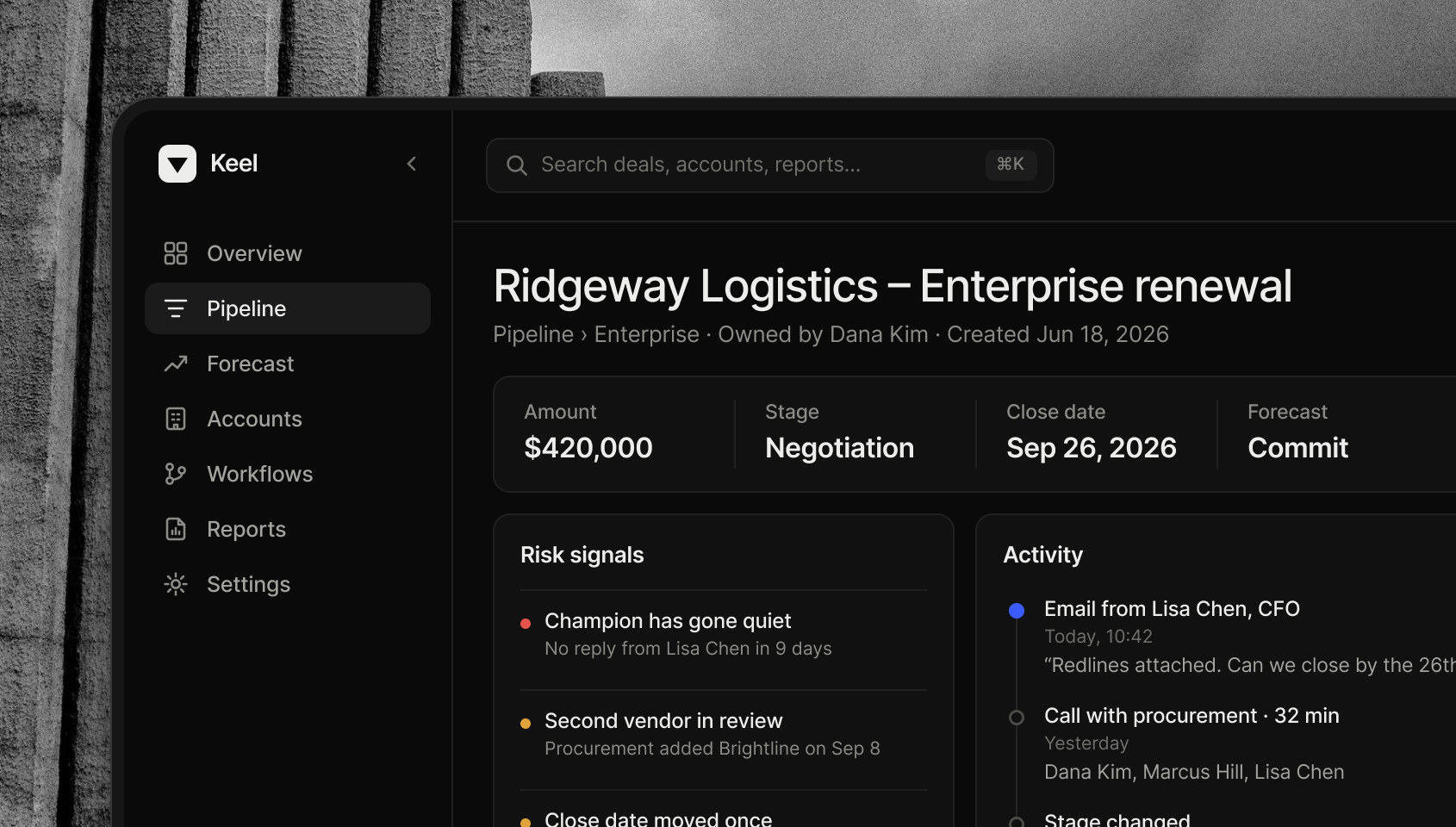
See why a deal moved and which signals put it at risk, before the forecast call.
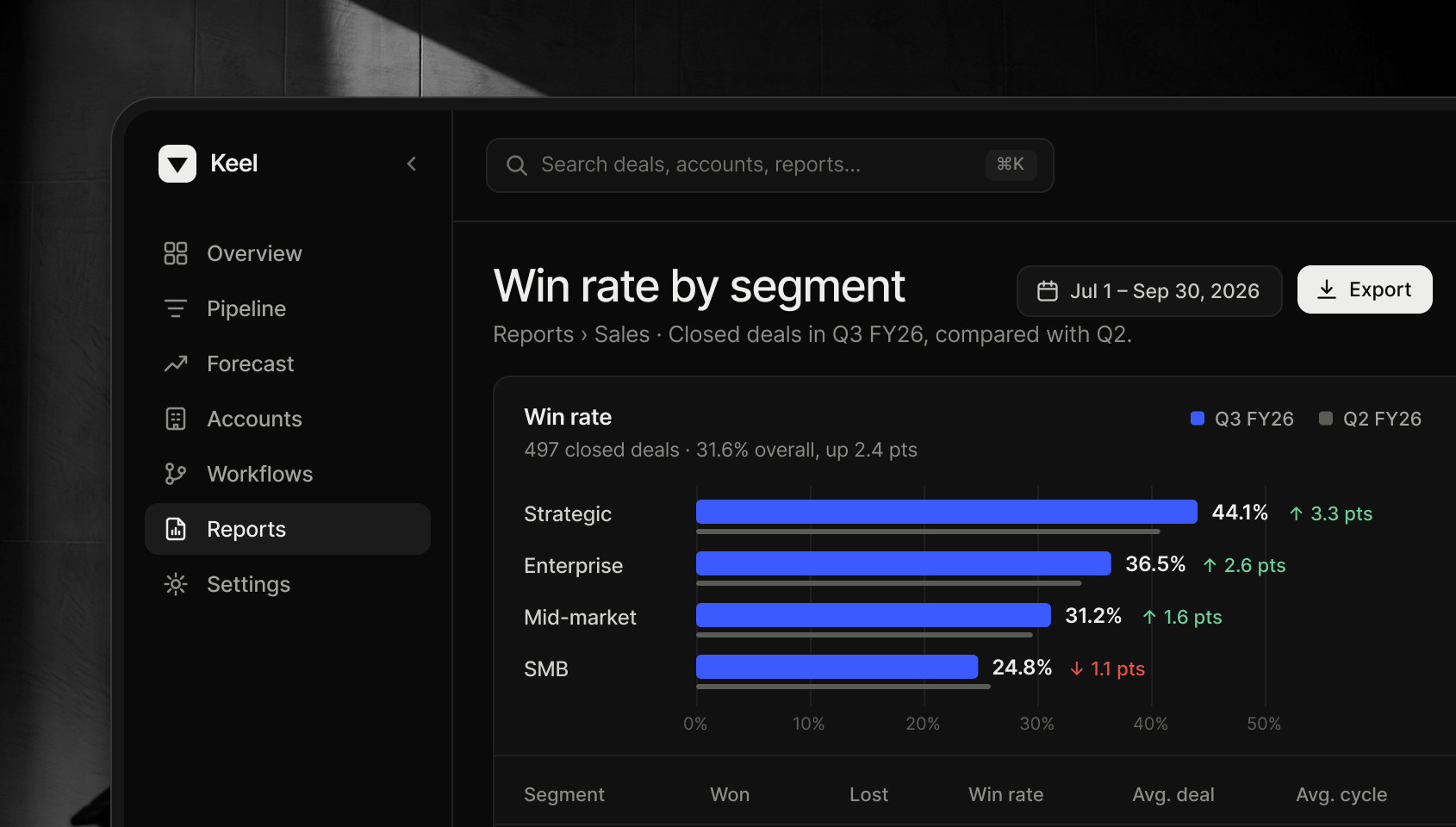
Every chart reads the same model the forecast does, so the deck and the commit never disagree.
How it works
A revenue architect sets Keel up with you.
01Days 1 to 3
Salesforce or HubSpot, Stripe or Chargebee, and your warehouse connect in an afternoon.
02Days 4 to 10
We map stages, segments and forecast categories, then back-test eight quarters.
03Day 14
Managers commit in Keel and the spreadsheet retires.
Customer stories
More than 600 B2B companies run their forecast on Keel.
FAQ
Everything teams ask before they move their forecast off spreadsheets.
Most teams are live in two weeks. Keel connects to your CRM and billing system in an afternoon; the rest is mapping your forecast categories with a revenue architect.
No. Keel reads your existing fields, stages and owners. Nothing in Salesforce or HubSpot has to be renamed or rebuilt.
Keel back-tests against your last eight quarters before go-live, so you see its accuracy on your own history before you rely on it.
Keel is SOC 2 Type II audited, encrypts data in transit and at rest, and supports SSO and role-based access down to the field.
Yes. Most customers start with one segment, prove the forecast for a quarter, then roll Keel out to the rest of the company.
Get started
Book a 30-minute walkthrough with your own pipeline data.