

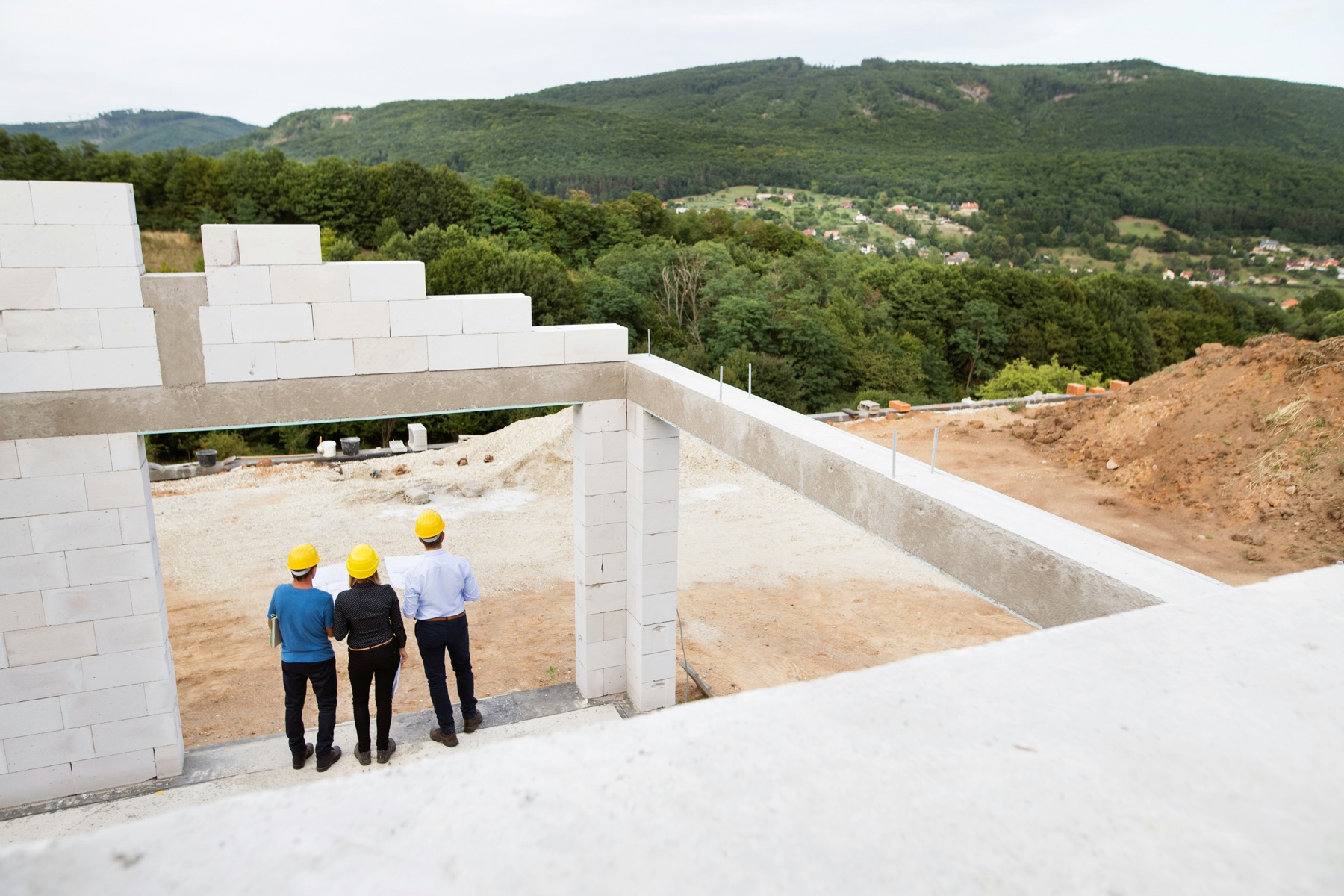
Construction crew on site at sunrise

Building responsibly, measured publicly

Climate, safety, community, and materials — the four areas where construction has the largest footprint, and where we hold ourselves to public targets. Numbers, not slogans.

Our commitments

Four areas, four targets, public reporting

Each pillar has a measurable target, an owner on our leadership team, and a number we publish every year. If we miss, we say why.

  • Carbon & climate

    50% reduction in embodied carbon across our portfolio by 2030 (vs. 2020 baseline). Net-zero scope 1+2 by 2030, validated against SBTi.

  • Worker safety

    Total recordable incident rate (TRIR) below 0.50, well under the 2.4 industry average. Zero life-changing injuries — non-negotiable.

  • Community & local hiring

    Minimum 25% local trade hours and 15% apprenticeship hours on every project over $20m. Tracked monthly, audited yearly.

  • Materials & circularity

    FSC-certified timber on 100% of projects. 90% diversion from landfill. Designed-for-disassembly principles in every spec.

2026 progress

By the numbers

Last year's results across the active portfolio. Independently verified by Bureau Veritas, published in our annual impact report.

  • 62%

    Reduction in embodied carbon since 2020, on like-for-like commercial projects.

  • 0.41 TRIR

    Total recordable incident rate across 14m worked hours — six times safer than the sector average.

  • 94%

    Local trade share on UK and EU projects last year. 31% of new apprenticeships went to under-25s from the host borough.

  • 91%

    Construction waste diverted from landfill. Concrete, steel, and timber tracked individually with chain-of-custody data.

Carbon & climate

Lower-carbon concrete, by default

Cement is responsible for roughly 8% of global CO2 emissions. We've moved to GGBS- and PFA-blended mixes as the default specification on every project, cutting concrete-related emissions by 35–55% without a cost premium. Where structural performance allows, we go further with limestone-calcined-clay (LC3) trials.

Every project ships with a carbon ledger — material, transport, and operational emissions modelled side-by-side with cost. Clients see the trade-offs before the spec is locked, not after.
DOWNLOAD CARBON METHODOLOGY
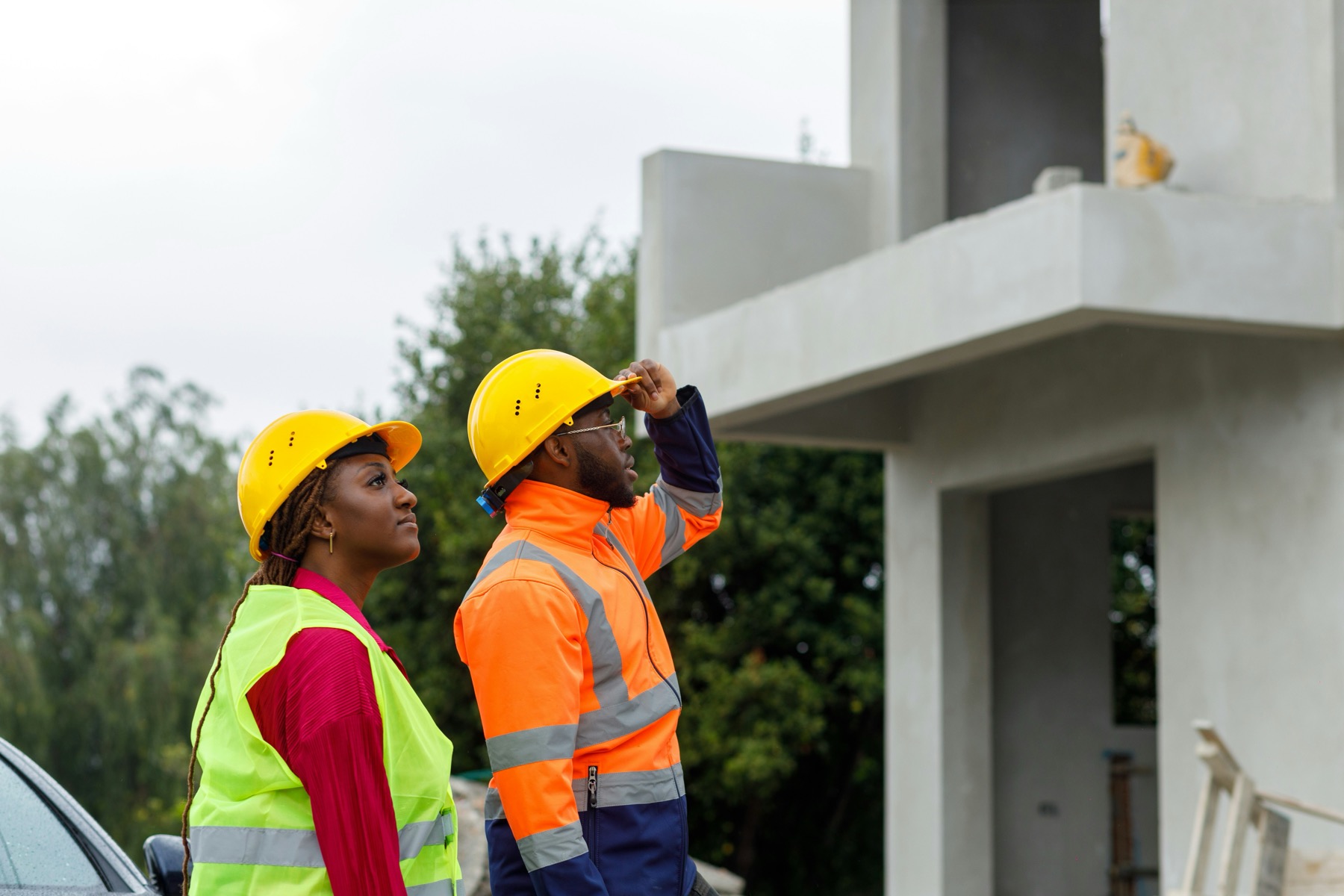
Pour-day on a low-carbon concrete project
Worker safety

Everyone goes home, every day

Safety isn't a programme. It's the bar for every decision — schedule, design, procurement, supervision. Our supervisors run daily pre-task briefings, every worker has stop-work authority, and we publish our incident data quarterly.

In 2026 we logged a 0.41 TRIR across 14 million worked hours, with zero life-changing injuries for the fourth year running. The 1,200 hours of safety training we delivered to subcontractor crews are part of why.
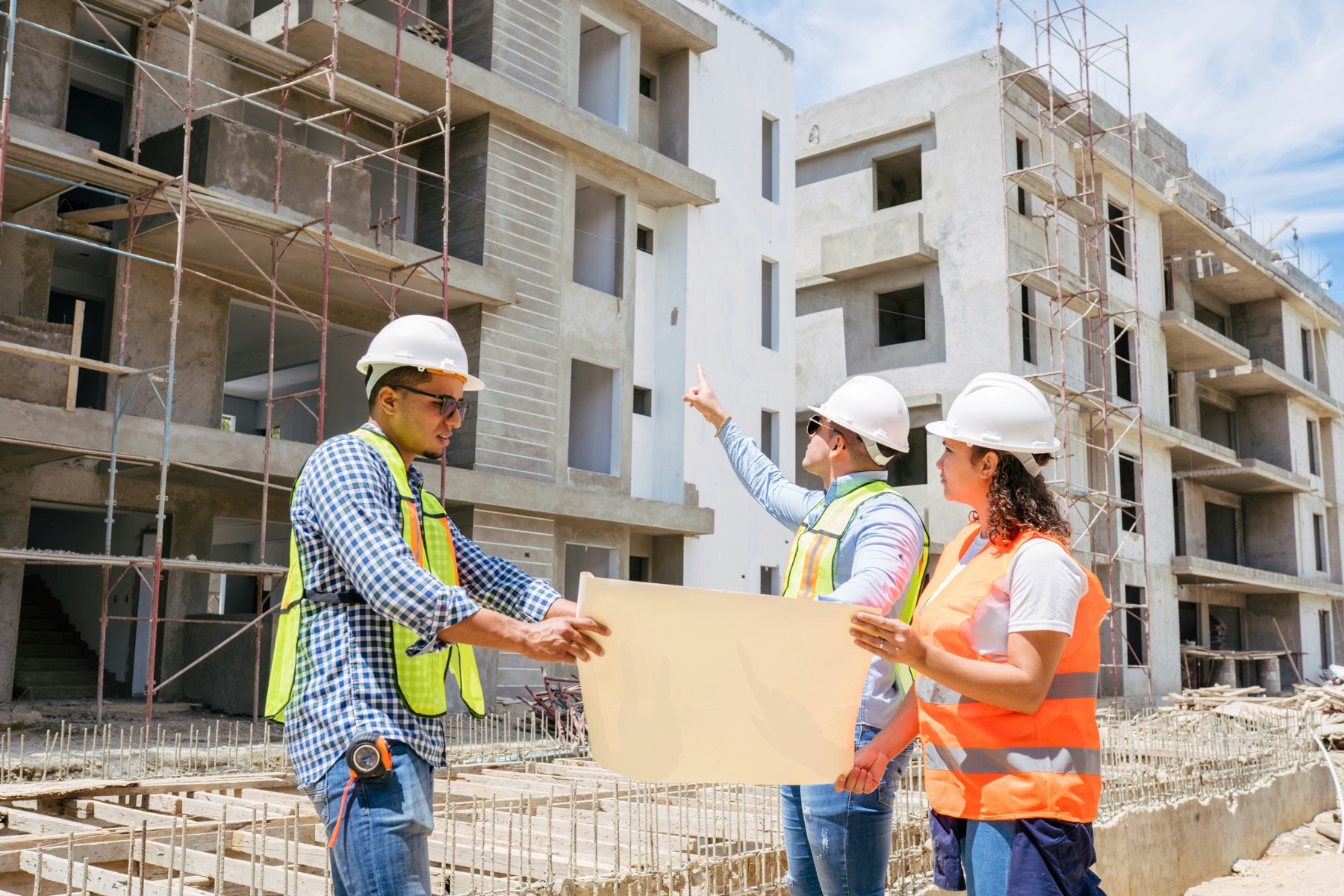
Site team in safety briefing
Community & local hiring

The people who live here build it

Local hire targets, apprenticeship pipelines, and named-supplier programmes are written into the contract — not bolted on afterwards. We partner with local further-education colleges to seed apprenticeship intakes 18 months before mobilisation, and ring-fence trade packages for SMEs in the host borough.

Last year, 94% of trade hours on our UK and EU projects went to people living within 25 miles of the site. 142 new apprentices started a career on a Meridian project.

Apprentice on site with mentor
How we are held to account

Frameworks, audits, certifications

Independent verification matters more than self-reporting. These are the standards we report against — externally audited, publicly published.

  • ISO 14001

    Certified environmental management system across every region we operate in. Annual third-party surveillance audits since 2014.

  • ISO 45001

    Occupational health and safety standard, covering all sites and self-perform crews. Recertified 2025.

  • B Corp Certified

    Verified score of 112.4 — top quartile of construction-sector B Corps globally. Recertification due 2027.

  • SBTi 1.5 degree aligned

    Near-term targets validated by the Science Based Targets initiative. Net-zero target submitted, awaiting validation.

  • BREEAM & LEED

    In-house accredited assessors on every commercial project. 87% of completed projects rated Excellent or higher.

  • Considerate Constructors

    UK Schemes member since 2009. Average score 44/50 across registered sites in 2026.

Frequently asked

Questions clients and investors ask

  • Are your carbon numbers third-party verified?

    Yes. Bureau Veritas audits our scope 1, 2, and 3 emissions data annually. The methodology and full dataset are published in our impact report and available on request for any active or prospective project.

  • How do you define 'local' hiring?

    For UK and EU projects, local means within 25 miles of the site boundary. For US projects, within the host county. We track and publish the share by trade, not just headcount, because hours-weighted numbers are harder to game.

  • Do you require subcontractors to share your standards?

    Yes. Every prequalified subcontractor signs our Responsible Supplier Code, which covers labour rights, materials provenance, and emissions reporting. Non-compliance is a contractual breach, not a recommendation.

  • What happens when you miss a target?

    We say so, in writing, in the next annual report — with the cause and the corrective action. Last year we missed our 50% local hire goal on two US projects (final figures 38% and 41%) because of trade availability. The report explains exactly why.

  • Can clients see project-level ESG data?

    Yes. Every active project has a live carbon and social-value dashboard accessible to client-side teams. We treat that data as part of the build, not a marketing add-on.

2026 Impact Report

Every number, every miss, every plan for next year.

72 pages. Independently verified. Published every March. Read it before you brief us.
DOWNLOAD THE REPORT
Cover of the 2026 Impact Report